
Montville Past Residents by Era
The trail for past residents changes as a Montville address moves back in time. Modern work starts with the tax parcel and the County Clerk’s recorded-document index. Earlier deeds continue through the Records Vault. Directories and telephone books can place listed households between recorded transfers, while the federal census provides a dated household view through its public release year. County Archives and state collections are the fallback for material that predates the everyday online tools.
| Source | Years it covers | Where held | What it can show |
|---|---|---|---|
| County Clerk online property index | 1960 to present | Morris County Clerk portal | Grantor and grantee, instrument, book/page, legal and parcel fields; images can be restricted or absent. |
| Records Vault and deed books | Pre-1960, plus certified or non-watermarked copies | Morris County Clerk Records Vault | Older chain-of-title evidence and copy requests by book/page. |
| Tax Board and SR1A | Selectable tax years; earliest exposed range not verified | Morris County Board of Taxation | Current or prior identifiers, assessment, sale, and property clues. |
| Regional directories | Morris County runs 1873 to 1909; telephone and street runs 1956 to 2006 with gaps | North Jersey History and Genealogy Center | Listed occupants, occupations, spouse or widow notes, address, and telephone-era clues. |
| Federal census | Public through 1950 | HeritageQuest, FamilySearch, library databases, or NARA | Household relationships, ages, occupations, and census geography. |
| Building contracts and liens | 1853 to 1972 contracts; 1851 to 1930 mechanics liens | Morris County Archives | Construction parties, materials, designs, plans, or a contractor-property connection. |
Start with the source closest to the time period. A current parcel does not by itself identify a household from a century ago, and a historical directory entry does not establish a modern owner.
Montville Past Residents Online
The most important online limit is the County Clerk index cutoff. The Morris County Clerk property-records information directs users to the online recorded-document search for documents from 1960 forward. Before that point, the trail moves to the Records Vault, not to a guessed negative result. The Vault is at 10 Court Street, Morristown, and its phone number is 973-285-6747. It handles pre-1960 materials and certified or non-watermarked copies.
A mail request should describe the record, include book and page when known, provide a return address, and use a check or money order payable to Morris County Clerk. The published schedule lists certified copies at $1 per page plus a $10 certification fee. Noncertified copies are $2 per page, with $1 postage if no self-addressed stamped envelope is supplied. Confirm other recording fees on the current fee page.
The Clerk’s online-search and Records Vault explanation is the source for this handoff.
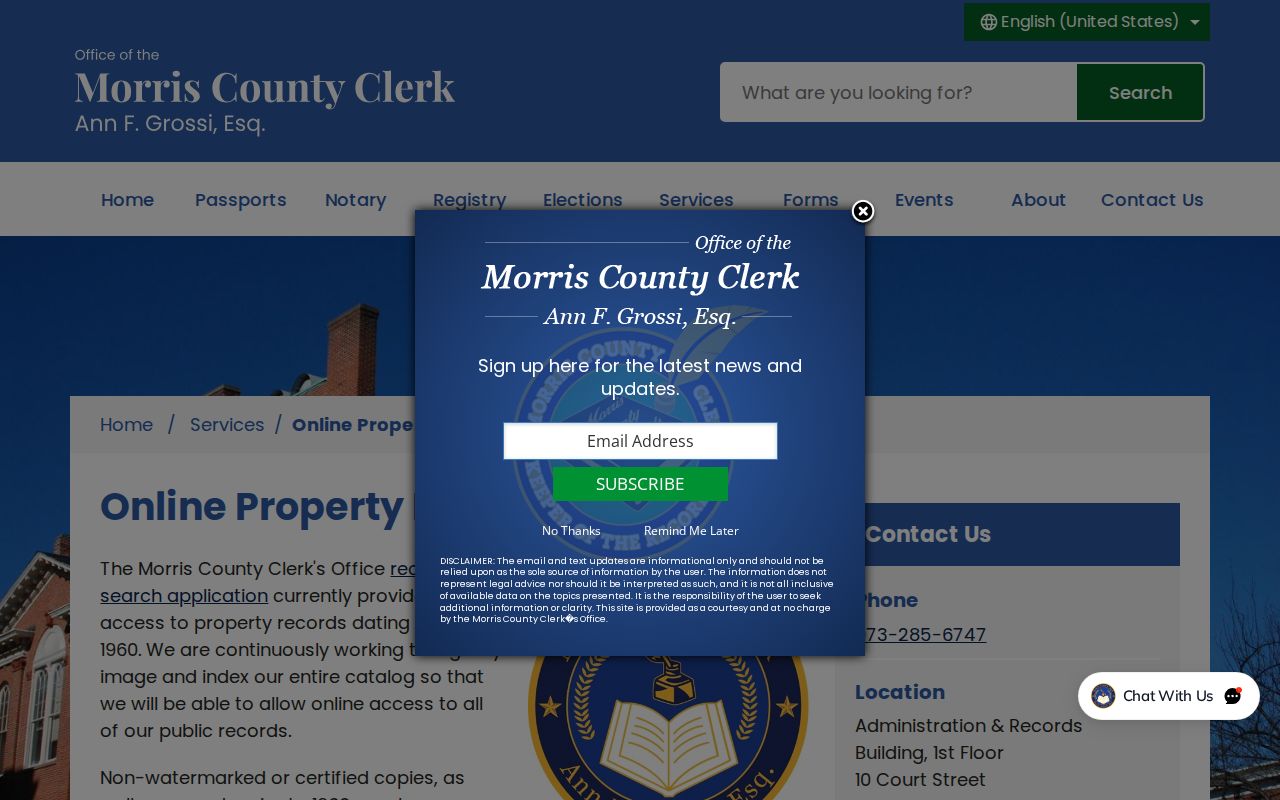
The cutoff is an insider tip, not a dead end. Preserve the web index book/page details so the earlier Vault request can continue the same chain.
Trace Montville Deed Chain
Tracing a past household begins with a property question: which legal parcel is at the address today? Use the Morris County Tax Records Search to collect the owner, situs address, block, lot, qualifier, and any prior block/lot. Then open the Morris County Clerk Online Property Records Search and search the current owner as a grantee for the likely purchase. A deed is stronger than a mailing address because its legal description ties the transfer to the land.
- Save the current Tax Board parcel details, including block, lot, qualifier, and any prior identifiers.
- Find the owner as grantee in the Clerk index, then inspect the likely conveyance’s recording date, instrument type, grantor, consideration, book/page, and legal description.
- Search that grantor as a grantee in an earlier date range, using the same block/lot or description to avoid a different property.
- Repeat backward through matching transfers. Search a trust, company, estate, married name, or spouse exactly as it appears in the document when needed.
- When the chain reaches the online cutoff, take the book/page and description to the Records Vault or the relevant map and archive source.
Mortgages, discharges, liens, easements, and subdivision maps can date a financing or land event, but a conveyance is the record that establishes a title transfer. If a seller held several parcels, lot/block, map reference, consideration, and description are the safeguards against joining the wrong chain.
The Morris County Clerk is the official county office behind the recorded-document index and copy routes.
Keep a dated chain sheet rather than relying on memory, since one past owner may appear in deeds for several locations.
Montville Past Resident Terms
Old documents use terms that can hide the actual path unless they are defined. The same parcel may carry a postal address in one record, a tax situs in another, and a longer legal description in the deed. For previous residents, preserve each version exactly enough to test it later against directories, maps, and census geography.
- Grantor
- The person, trust, company, or estate transferring an interest in property. In a sale deed, this is usually the seller.
- Grantee
- The person, trust, company, or estate receiving the interest. In a purchase deed, this is usually the buyer.
- Chain of title
- The sequence of recorded conveyances that links an identified parcel from one owner to an earlier owner.
- Legal description
- The recorded language or map-based parcel identification that distinguishes the land from a street address that may later change.
Do not equate owner with occupant. A deed answers a land-transfer question. A directory, census, obituary, or other dated source is needed before saying who lived there before.
Montville Archive Contract Clues
The Morris County Archives offers a useful house-history layer when a deed chain alone is thin. Its building contracts from 1853 to 1972 can identify owners, contractors, materials, designs, and sometimes plans. Mechanics liens from 1851 to 1930 can connect a property with a contractor. Road returns from 1741 to 1915 may name owners along a route, and estate materials can help bridge an owner to heirs.
The Archives is located through the Morris County Library at 30 East Hanover Avenue in Whippany. Research is by appointment in two-hour blocks: Monday through Wednesday and Friday at 10:30 to 12:30 or 2 to 4, and Thursday 2 to 4. Contact 973-829-8117 or abroschart@co.morris.nj.us. Bring the current address, approximate period, historic owner, and parcel details, because there is no verified Montville-wide house-history database.
The Morris County Archives finding aid lists the date ranges and appointment rules.
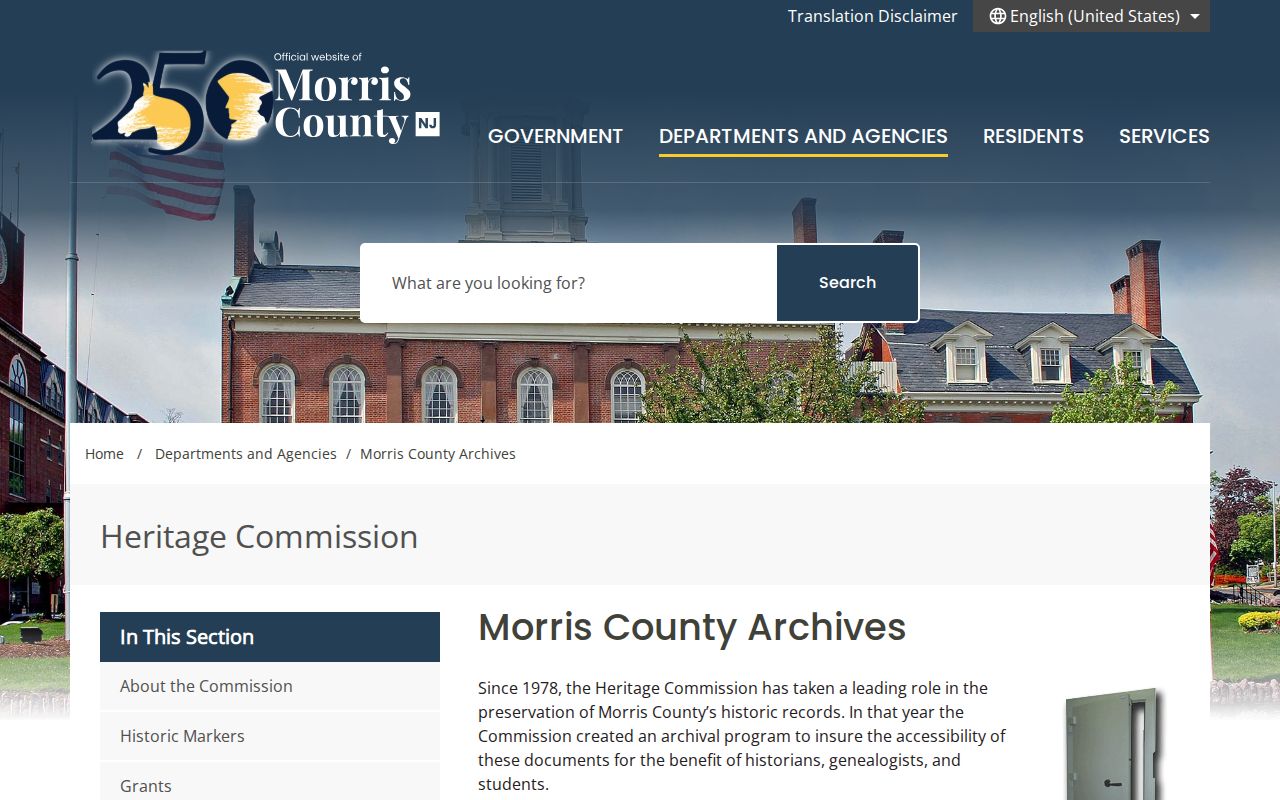
Archive records can strengthen a timeline, but they should be connected back to the deed’s legal parcel before assigning them to a particular house.
Montville Past Households in Directories
Directories are the bridge between ownership records and household history. The North Jersey History and Genealogy Center holds regional Morris County runs from 1873 to 1909, including 1894 to 1898 and 1902 to 1909 variants. It also holds scattered street-address directories from 1977 through 2006 and telephone runs from 1956 forward with gaps. These are regional collections, not proof that every edition has a Montville listing.
Look for an address, surname variants, spouse or widow notation, occupation, cross street, and the edition year. A listed entry can provide an occupant lead; it does not settle whether the person owned the land. The publisher and shelf details for these collections belong with the Montville city directories collection, while the immediate task here is to place the address in a backward timeline.
When a directory uses an old postal place or omits the street, compare nearby years and the deed owner. A renter, boarder, or household member may not appear in a given edition.
Montville Past Households Between Censuses
The federal census is public through 1950, but a census address can follow a different geography than a modern parcel. Pair a directory entry with the nearest available census rather than treating either one as complete on its own. Directories can show a move into or out of an address between census years; the census can add household relationships, ages, and occupations. Tax records help separate the property owner from a renter or boarder.
- Write down the address spelling, cross street, and directory edition year.
- Check the nearest census year and record the enumeration place along with the household details.
- Compare the listed owner and legal parcel in a deed or tax record from the same broad period.
- Use an obituary, probate file, or newspaper notice only as a dated lead, then corroborate it with the parcel or household record.
New Jersey State Archives genealogical collections include historical vital indexes, census guidance, naturalizations, court material, and county records. The Archives holds births from 1848 to 1925 and marriage and death records from 1848 to 1950, among other series. Availability and access still depend on the exact collection.
The State Archives collection search is a starting point for the older record layer.
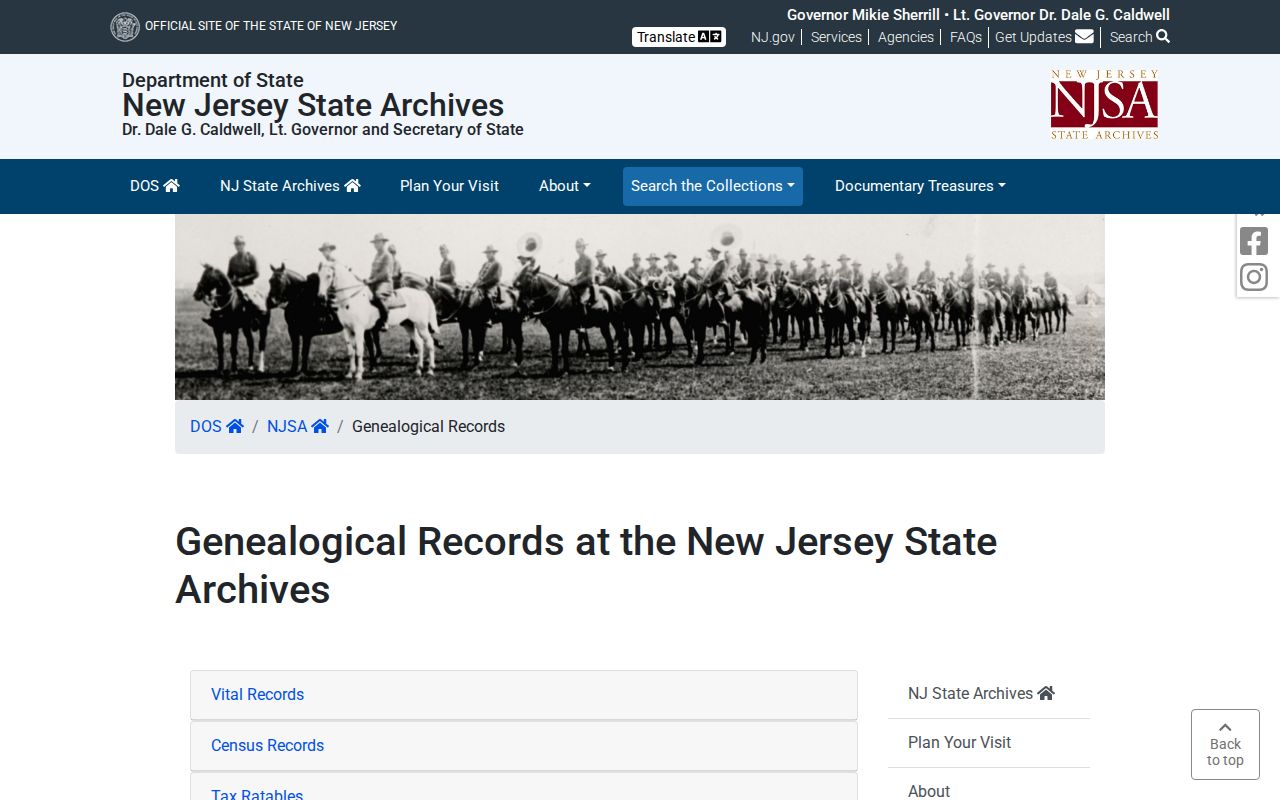
Record the repository, series, edition or book, and page or image identifier so another researcher can repeat the comparison.
Montville Historic Place Names
Address continuity is a Montville research issue. No authoritative township-wide street-renumbering history was located, so do not invent one when an old address fails. Bridge the old record with its road, cross street, historic owner, legal description, directory year, and parcel ID. A rural route or village label may be the only historic locator.
Search old place names beside the modern township name. Towaco can appear as Hook Mountain, Glenview, or White Hall. Pine Brook and Lake Valhalla may appear in postal, directory, church, map, or newspaper fields. A postal city, tax district, and situs address can describe the same property in different ways.
Note: A changed place label is a search lead, not proof that two records concern the same household or parcel.
Montville House History Maps
Sanborn fire-insurance maps are a qualified research lead, not a complete address history for Montville. The Library of Congress catalog for a March 1924 Boonton volume lists Montville as a secondary location, along with Mountain Lakes and Powderville, but the item is not available online. A stand-alone Montville map run was not verified.
Test the Library of Congress catalog and local map holdings for the exact place and address. Where no relevant sheet exists, building contracts, permits, tax cards, subdivision maps, and newspaper notices may provide stronger date evidence. Avoid claiming map coverage for every street or year.
Montville Past Resident Limits
Previous-resident research is strongest when it names the record and its date. An online index begins in 1960, while older deeds require the Records Vault, directories have edition and town-coverage gaps, and census records stop at their public release year. A current SDL permit workflow is account-gated, and the research did not verify historic closed-case retention. Those limits are part of an accurate house history.
Lawful use. Use Montville house-history records for family history, estate questions, property research, or personal curiosity. Do not use any result to stalk, harass, track, intimidate, or harm a living person.